Manifacturing of Cheese - Gianluca Re Fraschini "Per una Buona, Sana Cucina"
Menu principale:
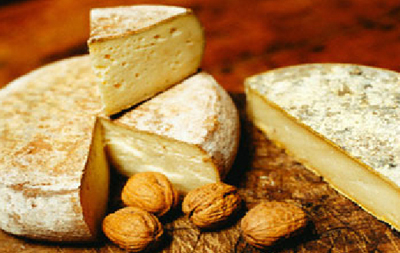
Manufactoring of cheese
Cheese -
During the Roman conquest cheese production considerably increased: flocks would come to the plains in winter and the words still relating to cheese production are a clear evidence of that: the term malga comes from malg, i.e. to milk (malgo for the Greeks, mulgere for the Latins); boter is a term coming from the Grecian term bu ; the terms casera, cascina, cacio etc. come from the Latin word caseus, just only to give a few examples.
It is merely impossible to follow the evelution of this activity through the different historical periods, from the barbarian invasions throughout the Middle Age, up to our time. Specific types of cheese were preferred from time to time according to the people tastes and requirements as well as cheese preservation time.
Cheeses are scientifically classified into hard, semi-